ESPAÑOL


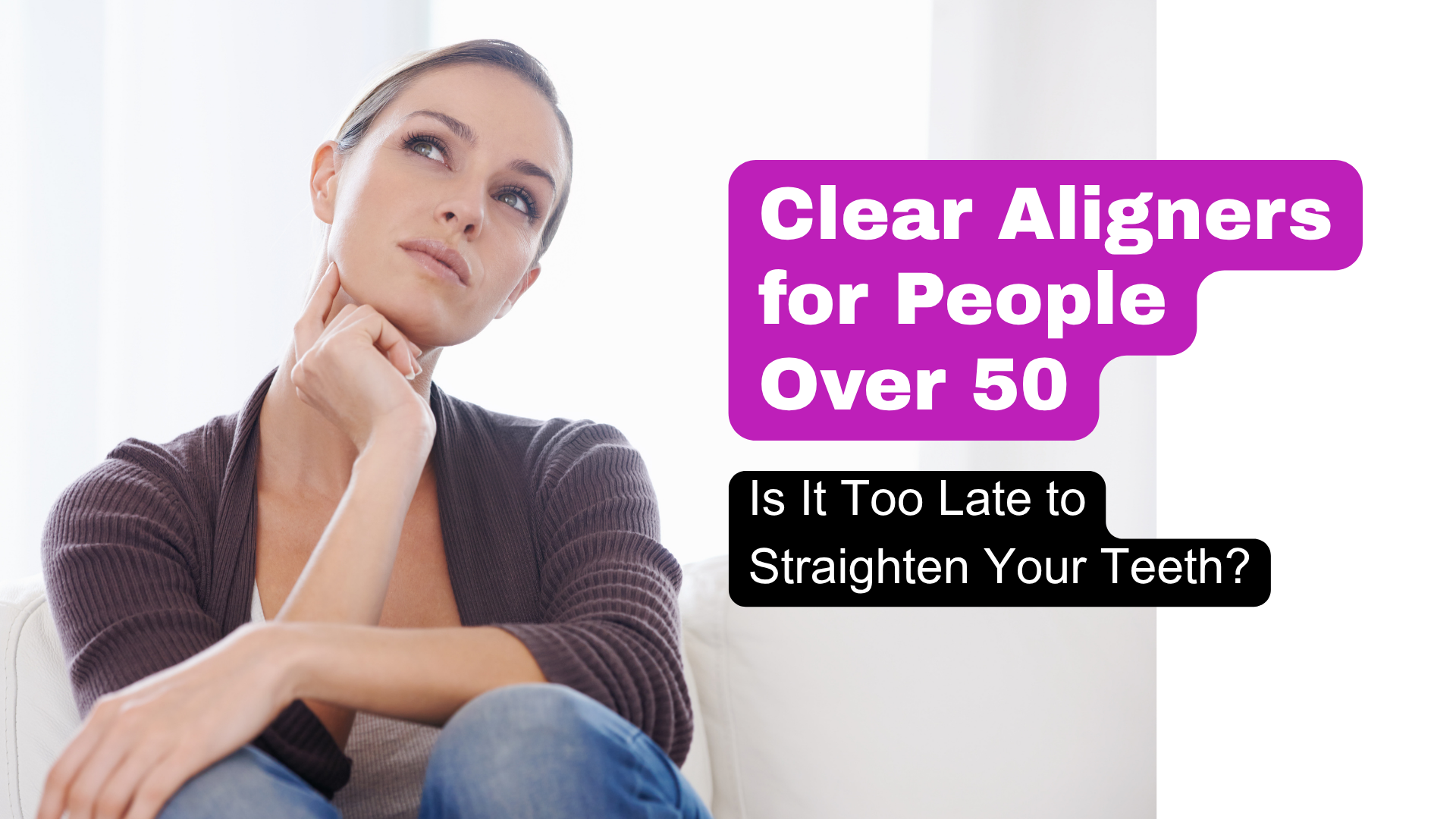
Clear Aligners for People Over 50: Is It Too Late to Straighten Your Teeth?
Common Questions - 07/06/2026
Keywords: clear aligners over 50, teeth straightening over 50, invisible braces older adults, am i too old for clear aligners, clear aligners 50s 60s
If you have been thinking about straightening your teeth for years maybe decades and you are now in your 50s or 60s, you may have quietly concluded that it is too late. That the time for orthodontics passed somewhere in your twenties. That it is a young person’s concern. We are here to tell you, clearly and with clinical backing: that assumption is wrong.
Age alone does not determine whether you are a candidate for clear aligner treatment. Tooth structure does. Gum health does. Bone density does. But none of those factors are determined by the number of years you have been alive. Adults in their 50s, 60s, and beyond achieve excellent aligner results every day, and the reasons they choose to start treatment are entirely valid.
Why Adults Over 50 Consider Clear Aligners
Teeth do not stay in one place over the course of a lifetime. Even people who had orthodontic treatment as teenagers may notice that their teeth have shifted over the decades particularly the lower front teeth, which are the most prone to drifting. Adults who never had treatment often find that crowding they lived with for years has worsened. And for those approaching retirement or significant life transitions, looking and feeling their best carries real personal meaning.
The most common reasons adults over 50 pursue clear aligner treatment include: teeth that have shifted or crowded over time, the desire to look polished and confident in professional settings before retirement, preparation for restorative dental work (aligners can create the proper spacing needed before implants or crowns), and simply the decision to finally do something they have wanted to do for a long time. All of these are excellent reasons to start.

What Actually Determines Candidacy at Any Age
Gum Health
Healthy gums are the most important prerequisite for any orthodontic treatment. Gum disease (periodontitis) that is active or untreated is a disqualifying factor not because of age, but because moving teeth through inflamed tissue is unsafe and unpredictable. If you have gum disease, it needs to be treated by a dentist or periodontist before starting aligner treatment. Once resolved, treatment can proceed.
Bone Density
Tooth movement happens through the bone: pressure dissolves bone on one side of a tooth and builds new bone on the other, allowing the tooth to shift safely into its new position. Bone density naturally decreases with age, and in some older adults, reduced bone density can affect how predictably and quickly teeth move. For most people in their 50s and 60s, this is not a significant factor. For those with more advanced bone loss, an orthodontist consultation will clarify what is achievable.
Missing Teeth
If you have missing teeth, the spaces those teeth occupied need to be considered in any alignment plan. In some cases, aligner treatment can help create or maintain proper spacing in preparation for implants or bridges. In others, missing teeth complicate treatment in ways that require in-person orthodontic consultation. This is something our reviewing orthodontist assesses when evaluating your impressions.
Existing Dental Work
Crowns, bridges, veneers, and bonding can all be present in a clear aligner patient. Aligners grip natural tooth structure, and some existing dental work may affect how the aligner fits or performs on specific teeth. This is evaluated case by case and is not an automatic disqualifier.
What Results Look Like for Adults Over 50
Realistic expectations are important. For mild to moderate alignment issues which cover the majority of adults over 50 who inquire about treatment clear aligners produce genuinely excellent results. Crowded front teeth, gaps, and spacing issues respond well to aligner treatment at any age. Treatment timelines may be slightly longer than in younger patients due to natural changes in bone density, but the outcomes are comparable.
The most impactful thing most adults over 50 report after completing treatment is not just how their teeth look, but how they feel about smiling. Years of self-consciousness about a smile do real damage to confidence in social, professional, and personal situations. Having that resolved in your 50s still has decades of positive impact ahead of it.

Before You Start: What to Do
- Have a dental checkup and cleaning before submitting impressions. This ensures your gum health is assessed and any existing issues are addressed first.
- Discuss any existing dental work (crowns, implants, bridges) with our clinical team when submitting your case so the reviewing orthodontist has full context.
- Be honest in your health history about any medications that affect bone density (such as bisphosphonates), as these can influence tooth movement.
- Ask about realistic timeline expectations for your specific case our orthodontist will outline what is achievable and in what timeframe based on your individual impressions.
The Bottom Line
It is not too late. It has never been too late. The question is not your age it is the health of your teeth, gums, and bone. If those are in good shape, there is no clinical reason why a person in their 50s or 60s cannot achieve a genuinely straighter, more confident smile with clear aligners. The only thing stopping most people over 50 from starting is the assumption that the window closed decades ago. It did not.
Categories

Recent Posts
High quality invisible aligners at an affordable price. Discover our easy teeth straightening orthodontic solution from home. Made in the USA! ¡Hablamos Español!
Sonrisas LLC © 2026. All Rights Reserved
Social
Sonrisas LLC © 2026. All Rights Reserved
Cart
Summary
Coupon/Promo Code
Subtotal
$0.00
Tax
$0.00
Shipping
FREE!
Total
$0.00
Need FINANCING?
No Problem!

As low as $70/month*
*select affirm at checkout to see rates and offers.

As low as $169/month*
*select afterpay at checkout to see rates and offers.